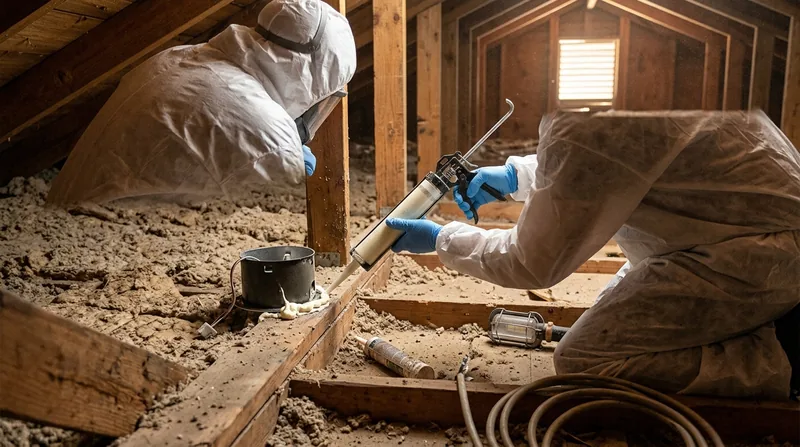




Humid Gulf Coast air works its way into Beaumont homes through unsealed attic top plates, can light penetrations, and gaps around ductwork. In the Golden Triangle's flat, wet terrain along the Neches River, air sealing in Beaumont stops that stack effect before it pulls moisture and conditioned air into spaces where they cost you money and breed problems. Whether your home sits on a pier-and-beam foundation with a vented crawl space in the Oaks, or on a slab in a mid-century ranch near the refineries, humid air works inward through assemblies that were never sealed against it. We identify those leaks, seal them with spray foam and caulk, and cut the rate at which outside air enters your conditioned space. The result is lower utility bills, less strain on your air conditioning system, and slower moisture migration into attic framing and insulation. This is the foundation of every retrofit we do, and it stands alone as a cost-effective upgrade for homes that already have insulation but lose performance to air leakage.
Why Air Sealing Matters in Beaumont's Hot, Humid Climate
Beaumont's long cooling season and year-round Gulf humidity create a specific failure mode: humid air moves INTO conditioned space through unsealed penetrations in the attic, not out. A vented attic pulls that damp air across ductwork and into the conditioned envelope. Can lights, electrical penetrations, and gaps at the top plate are the main culprits. Sealing these gaps with spray foam insulation and mechanical closure stops the inward movement of moisture and reduces the load on your air conditioning system during the brutal months from May through October.
- Spray foam seals gaps around recessed lights, exhaust vents, and electrical boxes that fiberglass cannot reach.
- Sealed attics reduce stack effect and prevent humid air from being drawn into the home through the top plate and rim joist.
- Lower cooling load translates to shorter run times on the compressor and measurably lower utility bills in summer months.
- Slower moisture ingress protects attic framing and existing insulation from the humidity that drives mold and rot in the Golden Triangle.
Homes in the Oaks, downtown Beaumont, and older neighborhoods near Nederland and Port Arthur are most vulnerable because their vented attics and pier-and-beam foundations expose them directly to the humid air that dominates this climate year-round.
Key info: The Southeast Texas building code permits attic ventilation, but ventilation itself is not a solution to humid air; it is a code requirement. Sealing the attic first, then venting it, or sealing it entirely with a sealed roof deck, is how you stop moisture from entering the home. Your local building department in Beaumont, Port Arthur, or Lumberton sets the standard for what ventilation ratio or sealed design applies to your address.
For more on how sealed attics work and when they are the right choice, see our page on attic spray foam insulation.
How We Seal Air Leaks in Beaumont Attics and Crawl Spaces
Air sealing starts with a walk-through of your attic or crawl space to identify the points where outside air enters. In a typical Beaumont home, that means the top plate rim, can light fixtures, electrical and plumbing penetrations, and the band joist where the rim sits on the foundation wall. We use closed cell spray foam to seal gaps larger than 1/2 inch and caulk for smaller cracks. The foam expands to fill the void, hardens to a rigid seal, and provides both an air barrier and an insulation value. Mechanical ventilation runs during the application and cure to manage VOCs, and we observe a 24 to 48 hour re-entry window before the space is occupied.
- We inspect the attic or crawl space for all penetrations, gaps, and thermal bypasses before quoting the job.
- Spray foam is applied in controlled passes to the specified thickness, matching the manufacturer ratio and drum temperature.
- We caulk smaller gaps and cracks where foam is not practical, ensuring continuous air sealing across the envelope.
- Mechanical ventilation runs during cure, and we provide a clear re-entry window so you know when the space is safe to occupy.
- A written estimate specifies the R-value, thickness, and coverage area so you understand exactly what you are paying for.
In a ranch home in Groves or a two-story on the west end of Beaumont, sealing the top plate and can lights typically takes one to two days and costs less than adding blown-in insulation over a leaky attic.
Example: A 1970s ranch in Port Neches with a vented attic and original fiberglass often has can lights that bypass the insulation entirely and a top plate full of gaps where the roof truss sits. Sealing those penetrations with spray foam and caulk cuts the rate of humid air entering the home and protects the existing insulation from moisture damage. The same home in Vidor or Bridge City, built on a slab with a garage below an upstairs bedroom, benefits from sealing the rim joist and the band joist where they meet the foundation.
See our rim joist and band joist spray foam page for more on sealing the foundation edge.
Air Sealing Methods and Approaches
| Approach | Description | Best for |
|---|---|---|
| Closed Cell Spray Foam | High-density foam applied at 1.5 to 2 pounds per cubic foot, expands to fill voids and hardens to a rigid air barrier with R-value of 6 to 7 per inch. | Gaps at the top plate, rim joist, and around penetrations in wet climates where moisture control is critical. |
| Open Cell Spray Foam | Lower-density foam applied at 0.5 pounds per cubic foot, expands more and provides R-value of 3.5 to 4 per inch. Vapor-permeable once cured. | Interior walls and attic cavities where vapor permeability is desired and moisture is not the primary concern. |
| Polyurethane Caulk and Sealant | Flexible, paintable sealant applied to cracks and gaps smaller than 1/2 inch. Adheres to wood, metal, and masonry. | Small cracks in the top plate, gaps around electrical boxes, and seams where spray foam is not practical. |
| Combination Approach | Spray foam for large gaps and penetrations, caulk for smaller cracks, creating a complete continuous air barrier. | Whole-attic and whole-crawl-space sealing jobs where multiple gap sizes must be addressed in one project. |
Each method serves a specific gap size and climate condition. In Beaumont's humid climate, closed cell spray foam is the standard for top plates and rim joists because it provides both an air barrier and a vapor barrier in a single application. Open cell foam and caulk fill roles where closed cell is overkill or where vapor permeability is an advantage. A professional air sealing job uses all three as the conditions warrant.
Air Sealing Cost in Beaumont: What to Expect
The cost of air sealing depends on the size of the attic or crawl space, the number and size of penetrations, and the accessibility of the work. A typical top-plate seal in a single-story ranch runs between $650 and $1,500. A larger two-story home with more penetrations and a rim joist seal may run $1,500 to $3,000. These figures assume standard attic access and no demolition of existing insulation or debris removal. Jobs that require removal of old insulation, decontamination, or work in a heavily cluttered crawl space cost more and are priced on site.
The most important step is getting a written estimate that specifies the R-value, thickness, and square footage of foam to be applied. This removes guesswork and lets you compare quotes fairly. We provide free written estimates within 24 hours at (409) 351-3691, with no obligation to book. Visit our pricing page for more detail on what drives cost and how to budget for your project.
Do not accept a quote with no thickness, no R-value, and no coverage area specified. That is the clearest sign of an installer who does not measure on site and cannot be held accountable for the work. Always ask for a detailed estimate before agreeing to a price.
What to Look for When Hiring an Air Sealing Contractor Near Beaumont
Air sealing is a specialized trade within spray foam insulation. When you hire a contractor, verify that they are fully insured and can provide a certificate of insurance on request. Ask whether they are registered with your city or county, as contractor registration rules vary by municipality across the Greater Beaumont area. Texas regulates contractors at the municipal level, not the state level, so always confirm what registration your city requires and verify it before work begins. You can contact your local building department in Beaumont, Port Arthur, Nederland, or Lumberton to learn what applies at your address.
- Request a written estimate with R-value, thickness, and coverage area specified in board feet or square footage.
- Ask for references from recent jobs in Beaumont, Groves, or Port Neches and call at least two to confirm the work quality and timeline.
- Verify that the contractor carries full insurance and can provide a certificate naming your address as an additional insured.
- Confirm the re-entry window and ventilation plan during cure so you know when the space is safe to occupy.
- Ask whether the estimate includes mechanical ventilation during application and what warranty applies to the installation.
Get at least two or three estimates before you decide. The lowest price is rarely the best choice, especially if it comes with no written specs and no clear timeline. A professional contractor will take time to inspect your attic or crawl space, answer your questions, and provide a detailed estimate before starting work. Contact us at our contact page to request your free estimate today.
Air Sealing in Beaumont: Pricing Guide
| Service | Price | Details |
|---|---|---|
| Attic Top Plate Seal | Starting at $650 | Spray foam sealing of the top plate rim and can light penetrations in a single-story home attic, includes written estimate with R-value and thickness specs |
| Rim and Band Joist Seal | Starting at $800 | Closed cell spray foam applied to the foundation edge and band joist in crawl space or basement, typical for pier-and-beam or slab-on-grade homes in Beaumont |
| Whole-Attic Air Sealing | Starting at $1,500 | Complete sealing of top plate, penetrations, can lights, and ductwork bypass in a two-story or large single-story attic with multiple zones |
| Insulation Removal and Reseal | On estimate | Cost increases if old fiberglass or failed foam must be removed before sealing; debris removal and disposal add to the project scope |
| Travel | Included | No mileage fee or travel charge for jobs in Beaumont, Port Arthur, Nederland, Lumberton, and surrounding service areas |
| Free Estimate | Free | Written quote within 24 hours with no obligation, call (409) 351-3691 to schedule your on-site inspection |
Indicative pricing, the exact cost depends on square footage, finish, and site access. Free personalized estimate within 24h at (409) 351-3691.


