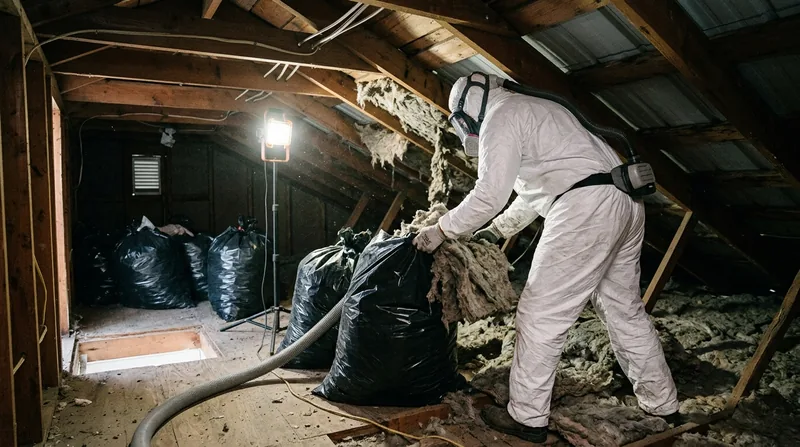




Decades of humid Beaumont summers leave old attic insulation flattened, damp, and no longer doing its job. Whether you have fiberglass batts that have settled into a thin mat, blown-in cellulose that has absorbed moisture from the vented attic, or failed spray foam from a previous contractor, insulation removal in Beaumont is the critical first step before any new foam system goes in. The flat terrain and proximity to the Neches River mean year-round humidity drives inward through attic assemblies, and old insulation that has lost its R-value compounds the problem. We remove failed insulation from vented attics in mid-century ranches, older Oaks-area homes on pier-and-beam foundations, and newer slab-on-grade ranches across the Golden Triangle before installing a sealed, durable spray foam system that actually controls moisture and energy loss.
Why Insulation Removal Matters in Beaumont's Hot, Humid Climate
Beaumont's long cooling season and heavy humidity create a specific failure mode: old insulation absorbs moisture and compacts under decades of heat, losing the air pockets that made it effective. Fiberglass batts installed in the 1970s and 1980s in homes near downtown and in the Oaks are often matted flat, their R-value cut in half or worse. Blown-in cellulose and fiberglass in vented attics pull in humid air around the ductwork, and the insulation itself becomes a moisture sink. When you're paying to cool an attic that is not actually insulated, your energy bills stay high and your indoor air stays damp. Removing the failed material and starting fresh with closed-cell or open-cell spray foam gives you an air-sealed, moisture-controlled assembly that works with Beaumont's climate, not against it.
- We extract all old fiberglass, cellulose, or failed foam from the attic cavity without disturbing the roof decking or rafters.
- We bag and haul all removed insulation and debris off-site, leaving the attic clean and ready for new foam application.
- We inspect the attic framing, ducts, and substrate for moisture, leaks, or contamination before any new insulation is installed.
- We document the attic condition with photographs and notes so you have a record of what was there and what the substrate looks like now.
This process is the only honest way to know what you are starting with and to guarantee that new foam bonds properly and performs as specified.
Key info: Beaumont's pier-and-beam homes in the Oaks and near downtown often have crawl spaces or attics that have never been sealed. Old insulation sitting on top of a vented, humid attic is a recipe for mold, mildew, and energy waste. Removal and replacement with spray foam eliminates the moisture path entirely.
For more details on what your attic can look like after a complete retrofit, see our attic spray foam insulation service.
How We Remove Old Insulation: Step-by-Step Process in Beaumont
Insulation removal is a methodical job, not a dump-and-go operation. We bring in containment and ventilation equipment, pull the old material systematically, and leave your attic in condition for the next phase of work. The process takes care around existing ductwork, electrical runs, and structural members, and we follow all safety protocols for handling and disposal.
- We set up mechanical ventilation and containment barriers to isolate the work area and keep dust and debris out of your living space.
- We remove all old insulation material layer by layer, sorting recyclable and waste materials into separate bins.
- We vacuum and sweep the attic floor, framing, and any exposed ducts to remove residual dust and loose fibers.
- We inspect the entire attic for moisture stains, rot, pest damage, or leaks and flag any issues before new work begins.
- We take measurements and photographs to document the attic dimensions and condition for your records and for the foam estimate.
Once the attic is clean and inspected, you have a clear picture of what needs to happen next and a solid foundation for your new foam system.
Real example: A mid-century ranch in Groves with original fiberglass batts in the attic and a slab-on-grade foundation had settled insulation and high summer cooling bills. We removed all the old batts, cleaned the attic, and found rodent droppings in one corner. The homeowner had the area treated, and we then sprayed closed-cell foam to seal the attic and rim joists. Six months later, the energy bill was down 18 percent and the indoor humidity stayed steady even during the heaviest summer heat.
Learn more about air sealing and how it complements insulation removal.
Insulation Removal Methods and Equipment
| Method | Description | Best for |
|---|---|---|
| Manual removal with containment | Hand-pulling and bagging insulation with local ventilation and dust control active throughout the work. | Attics with fiberglass batts, blown cellulose, or lightweight failed foam where access is reasonable and framing is sound. |
| Vacuum extraction with negative pressure | Powered vacuum system pulls loose blown-in insulation into a collection bin while maintaining negative pressure to contain dust. | Large attics with blown cellulose or fiberglass where dust control and speed are priorities and attic size allows equipment placement. |
| Selective foam removal | Cutting and peeling away failed or inadequate spray foam with hand tools and careful framing inspection to avoid damage to roof deck or ducts. | Attics with previous spray foam that did not cure properly, has poor adhesion, or was applied over moisture-damaged substrate. |
| Substrate preparation and cleaning | After removal, vacuuming, damp-wiping, and drying of the attic deck to ensure a clean, dry surface for new foam application. | All removal jobs, as a standard final step before any new insulation is installed or sprayed. |
Each method is matched to the specific insulation type, attic layout, and condition. We choose the approach that minimizes dust, protects your home, and leaves the cleanest possible surface for new work.
Insulation Removal Cost in Beaumont: What to Expect
The cost of insulation removal in Beaumont starts at around $950 for a smaller attic and scales upward based on the volume of material, the attic's accessibility, and whether the old insulation is matted, loose, or failed foam. A typical mid-sized attic on a ranch or cottage runs $1,200 to $2,000. Larger two-story homes, homes with complex attic layouts, or jobs requiring extra ventilation and containment can reach $2,500 to $3,500 or more. The biggest cost drivers are the square footage of the attic, the density and type of old insulation, and the time required for safe extraction and cleanup.
Getting 2 or 3 estimates from local contractors is always smart. Each estimate should specify the attic square footage, the removal method, what is included in the haul-away, and whether the price covers a final inspection and documentation. A written estimate with clear scope is far more useful than a phone quote, and it gives you a benchmark to compare against other bids. Most removal jobs are quoted and booked quickly because the work is straightforward once the attic is accessed.
For a full breakdown of pricing across all our services, including removal and insulation replacement, visit our pricing page.
What to Look for When Hiring an Insulation Removal Contractor Near Me in Beaumont
Insulation removal is a straightforward trade, but the quality of the work and the professionalism of the crew matter enormously. A bad removal job leaves dust in your ducts, moisture in the framing, or debris scattered in the attic, setting up a failed foam installation down the road. When you call a contractor, ask for a written estimate, ask to see proof of insurance, and ask whether the contractor is registered with the city or county where you live (registration requirements vary across the Golden Triangle, so always check your local building department first). References from recent jobs in your neighborhood are worth their weight in gold.
- Request a written estimate that specifies the attic square footage, removal method, and what is included in the price and haul-away.
- Confirm that the contractor carries liability and workers compensation insurance and ask for a certificate of insurance before work starts.
- Ask whether the contractor is registered as required by your city or county, and verify the registration by contacting your local building department.
- Ask for references from homeowners in Beaumont, Groves, Lumberton, or nearby towns where the contractor has done recent removal work.
- Confirm that the estimate includes a final walkthrough, photographs of the clean attic, and documentation of what was removed.
A contractor who is honest about what the job entails, who provides a clear estimate, and who is reachable after the work is done is a contractor worth hiring. For a free estimate and a conversation about your specific attic, call us at (409) 351-3691 or visit our contact page.
Insulation Removal in Beaumont: Pricing Guide
| Service | Price | Details |
|---|---|---|
| Small attic removal | Starting at $950 | Fiberglass or cellulose removal from attics under 800 sq ft, includes haul-away and basic cleanup |
| Mid-sized attic removal | Starting at $1,400 | 800 to 1,500 sq ft attic with moderate insulation depth, manual or vacuum extraction, full containment and disposal |
| Large or complex attic removal | Starting at $2,100 | Over 1,500 sq ft, dense insulation, tight access, or failed foam requiring selective cutting and framing inspection |
| Failed spray foam removal | On estimate | Previous foam installation requires site inspection to assess adhesion, substrate condition, and safe removal approach |
| Travel and setup | Included | No mileage or mobilization fees in Beaumont and surrounding service areas, all equipment and containment provided |
| Free written estimate | No obligation | Response within 24 hours at (409) 351-3691, includes attic walkthrough, photographs, and removal scope |
Indicative pricing, the exact cost depends on square footage, finish, and site access. Free personalized estimate within 24h at (409) 351-3691.


