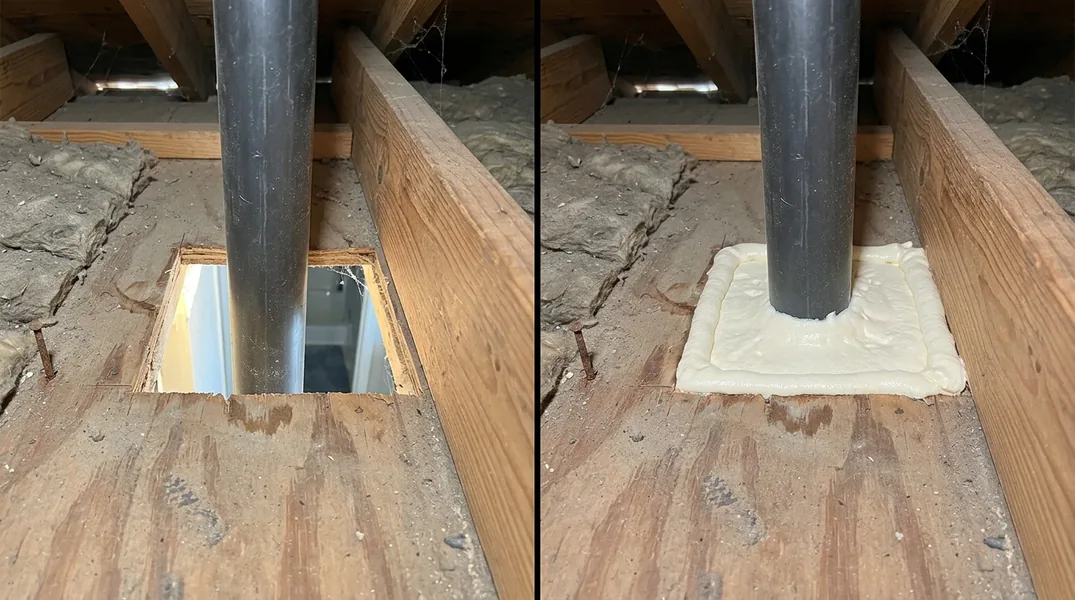
Understanding the Difference: Air Sealing vs. Spray Foam
When it comes to improving your home's energy efficiency, you'll often hear two approaches mentioned: air sealing and spray foam insulation. While both serve important roles in keeping your Beaumont home comfortable and reducing energy bills, they work in fundamentally different ways.
Air sealing involves identifying and closing gaps, cracks, and leaks throughout your home's envelope. This might include weatherstripping around doors and windows, caulking gaps where utilities enter, or sealing ductwork. The goal is to prevent conditioned air from escaping and outside air from infiltrating. Spray foam insulation, on the other hand, provides both air sealing and thermal resistance in one application. Attic Spray Foam Insulation expands to fill cavities, creating an airtight barrier while simultaneously insulating. For many homeowners in Beaumont, the choice between these methods depends on their specific needs, budget, and the condition of their home.
Spray Foam Insulation R Value Per Inch: What You Need to Know
R-value measures thermal resistance, and it's one of the most important factors when evaluating insulation effectiveness. Closed Cell Spray Foam Insulation typically offers an R-value of 6 to 7 per inch, making it one of the most efficient insulation materials available. Open Cell Spray Foam Insulation, by contrast, provides approximately 3.5 to 3.6 R-value per inch. This significant difference means that closed cell foam achieves higher thermal resistance in less thickness, though it typically costs more than open cell alternatives.
For attic applications in Texas, where summer heat is relentless, the higher R-value of closed cell spray foam can translate to substantial energy savings. A single inch of closed cell foam provides more insulating power than nearly two inches of open cell foam. However, open cell spray foam still offers excellent air sealing properties and works well for interior applications where space is less constrained. Your choice should factor in your climate, budget, and the specific areas you're insulating. Beaumont Spray Foam Insulation can help you determine which type delivers the best value for your particular situation.
How Thick Should Spray Foam Be: Finding the Right Depth
Determining the correct thickness of spray foam depends on several factors, including your home's location, the area being insulated, and your energy goals. In Texas, the Department of Energy recommends attic insulation with an R-value of R-38 to R-60, depending on your specific zone. Since closed cell foam provides 6 to 7 R-value per inch, you'd need approximately 6 to 9 inches to meet these standards. Open cell foam would require roughly 11 to 17 inches to achieve the same protection.
Most attic applications in Beaumont benefit from 5 to 8 inches of closed cell spray foam or 8 to 12 inches of open cell foam. However, your attic's existing insulation, ventilation setup, and joist height all influence the ideal thickness. Over-application wastes money, while under-application leaves your home under-protected. A professional energy audit can pinpoint exactly how thick your spray foam should be. Contact Beaumont Spray Foam Insulation at (409) 351-3691 to discuss your specific needs and receive personalized recommendations.
R Value Requirements by State: Texas Standards Explained
Texas falls into Climate Zone 2, which has specific R-value recommendations for different areas of your home. For attics, the U.S. Department of Energy recommends R-38 as a minimum, though R-49 to R-60 provides optimal efficiency in our hot climate. Wall insulation typically requires R-13 to R-21, while basement and crawlspace insulation should reach R-10 to R-19. These aren't strict legal requirements in all cases, but they represent best practices for energy efficiency and comfort.
The federal insulation tax credit ended on December 31, 2025, so ask your utility company about any current rebates instead. Texas offers various incentive programs to encourage homeowners to upgrade their insulation. Whether you're installing Wall & Injection Foam Insulation or attic spray foam, ensuring you meet state recommendations positions you to take advantage of these financial benefits. The investment in proper insulation thickness pays dividends through lower energy bills and potential tax savings.
Rebates: Reducing Your Investment
One of the most overlooked aspects of upgrading your home's insulation is the financial assistance available to homeowners. This credit applies to energy-efficient insulation installed in your primary residence and can significantly offset your out-of-pocket expenses.
Texas and local utilities often offer rebates for insulation upgrades. Some programs provide direct rebates when you install spray foam or other approved insulation materials, while others offer energy audit programs that help you identify the most cost-effective improvements. The amount varies depending on the program and your specific location within Beaumont. Beaumont Spray Foam Insulation can help you understand which rebates and credits apply to your project. Schedule a free estimate today to explore your options and learn how to maximize your savings.
Making Your Decision: When to Choose Air Sealing, When to Choose Spray Foam
The honest answer is that most homes benefit from both air sealing and spray foam insulation, but the priority depends on your current situation. If your attic already has adequate insulation but you notice drafts, temperature inconsistencies, or high energy bills, air sealing might address the problem more cost-effectively. Simple air sealing can often be completed in a day and requires minimal disruption to your home.
However, if your attic insulation is outdated, insufficient, or nonexistent, spray foam delivers superior performance. It simultaneously addresses both thermal resistance and air infiltration in one application, providing better long-term results. Spray foam also works exceptionally well for challenging areas like cathedral ceilings, knee walls, and rim joists that are difficult to seal with traditional methods. For most homes in Beaumont, a comprehensive approach combining targeted air sealing with spray foam insulation in key areas delivers the best return on investment. Contact Beaumont Spray Foam Insulation at (409) 351-3691 to schedule your free estimate and receive a customized recommendation based on your home's specific condition and your energy goals.
Looking for a professional spray foam insulation contractor in Beaumont? Beaumont Spray Foam Insulation responds fast for all your spray foam insulation needs.
Get a Free Quote