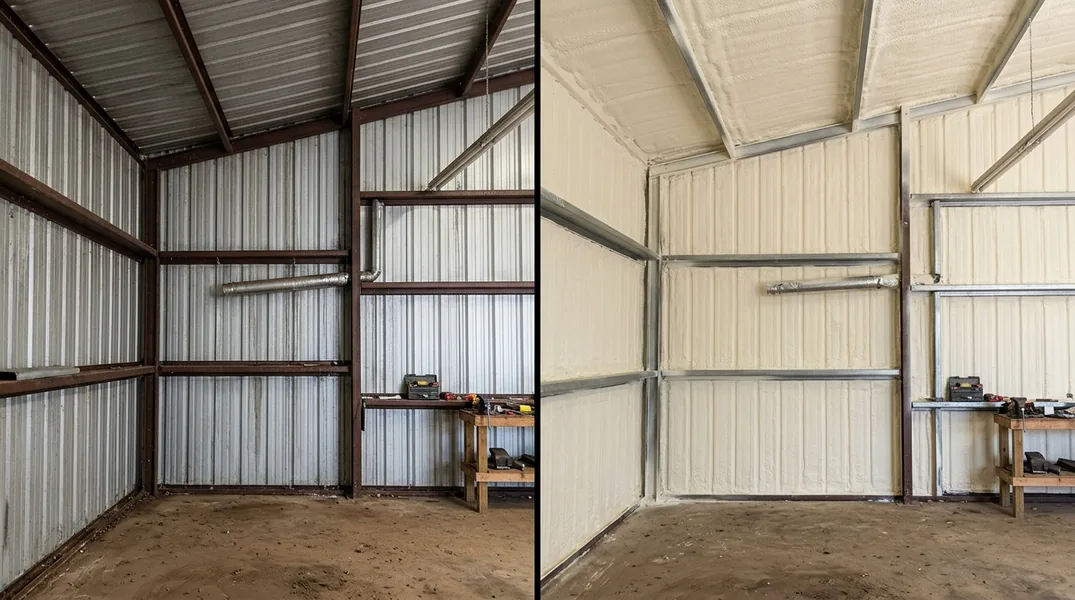
The Mid-Century Ranch Problem: Why Beaumont Homes Need Better Attic Insulation
The charm of mid-century ranch homes scattered throughout Beaumont and surrounding areas comes with a hidden cost: inadequate attic insulation. Built during the 1950s and 1960s, many of these homes were constructed with minimal thermal protection, relying on basic fiberglass batts or even loose fill that has settled and compacted over decades. Today, as energy costs climb and summer heat intensifies, homeowners are discovering that their attics are working against them, not for them.
The problem intensifies for properties located near industrial corridors. The vibrations from nearby refineries and chemical plants can actually cause traditional insulation materials to shift and compress over time. What started as a respectable R-value in 1965 may have degraded to half its original effectiveness by 2024. Homeowners in Beaumont often notice this first through their utility bills, which spike during summer months when air conditioning runs constantly trying to cool homes with compromised attic barriers.
Spray Foam vs Blown In Insulation: A Direct Comparison for Attic Performance
When comparing Attic Spray Foam Insulation to blown in insulation, the differences become clear once you understand how each material behaves over time. Blown in insulation, whether cellulose or fiberglass, relies on loose particles that settle into the cavity space. While this approach offers a lower upfront cost, it creates several long-term performance issues. The material compacts under its own weight, loses R-value as it settles, and leaves small gaps and voids where air can infiltrate. In attics subject to vibration or temperature fluctuations (common in industrial areas), blown in materials shift even faster.
Spray foam, by contrast, expands and cures into a solid, continuous barrier that adheres to every surface it contacts. It doesn't settle, compress, or shift with building movement. Open Cell Spray Foam Insulation provides an R-value of approximately 3.5 to 3.8 per inch, while Closed Cell Spray Foam Insulation delivers 6.0 to 7.0 per inch. For mid-century ranches with limited attic depth, closed cell spray foam achieves superior thermal performance in the same physical space. Additionally, spray foam creates an air seal that blown in insulation cannot match, eliminating the thermal bridging that plagues traditional approaches.
Spray Foam vs Fiberglass: Why Fiberglass Fails in Beaumont Attics
Fiberglass batts were the industry standard for decades, and many Beaumont homes still rely on original fiberglass installations. The material is inexpensive, easy to install, and non-combustible, which explains its popularity. However, fiberglass has fundamental limitations that become apparent in actual performance. Fiberglass batts only work when they fill the cavity completely with no gaps, compression, or moisture intrusion. In practice, achieving this standard is nearly impossible. Batts compress around electrical wiring, settle away from rafter edges, and absorb moisture from humid attic air, which reduces their insulating value significantly.
Spray foam addresses every weakness that fiberglass exhibits. It fills every nook, seals around obstructions, and creates a moisture barrier that prevents humidity from degrading the material. For homeowners comparing spray foam vs fiberglass, the performance gap widens further when considering air leakage. A single unsealed gap in fiberglass insulation can compromise an entire section of the attic's thermal envelope. Spray foam's continuous application means there are no gaps, no shortcuts, and no compromise. This is particularly valuable for older homes where attic geometry is irregular and framing is imperfect.
Best Insulation for Attic: Why Spray Foam Leads the Field
When homeowners ask what the best insulation for attic applications is, the answer depends on priorities and circumstances. However, spray foam consistently outperforms alternatives across multiple performance metrics. It delivers superior R-value density, creates complete air sealing, resists moisture, prevents settling, and lasts the lifetime of the home without degradation. Unlike blown in insulation or fiberglass, spray foam doesn't require replacement or re-fluffing after ten or twenty years.
For mid-century ranches with shallow rafter bays, spray foam efficiency is invaluable. A closed cell application can achieve R-30 or higher in just 4 to 5 inches of depth, whereas fiberglass would require 8 to 10 inches to reach the same value. This matters when attic space is already constrained. Additionally, spray foam's air-sealing properties reduce HVAC cycling, lower utility costs, and improve indoor comfort year-round. Homeowners in industrial areas near refineries benefit especially from spray foam's resistance to vibration-induced settling and its durability under environmental stress.
Spray Foam vs Cellulose: Performance and Durability Comparison
Cellulose insulation is marketed as an eco-friendly alternative, made from recycled paper and treated with fire retardants. When comparing spray foam vs cellulose, both materials can achieve similar R-values per inch, but their real-world performance diverges significantly. Cellulose is a blown in material that settles over time, compressing by 10 to 20 percent within the first year. It absorbs moisture readily, which can trigger mold growth in humid climates like Southeast Texas. Cellulose also requires chemical treatments to resist fire and pests, and those treatments can off-gas or degrade over decades.
Spray foam eliminates these concerns entirely. It doesn't settle, doesn't absorb moisture, and provides inherent fire resistance without chemical additives. While cellulose may be slightly less expensive initially, the long-term performance gap favors spray foam substantially. Homeowners who choose spray foam avoid the need for future re-treatment, re-fluffing, or replacement that cellulose often requires. For homes in Beaumont where humidity and heat are constant challenges, spray foam's moisture resistance is a genuine advantage that translates to lower maintenance and better durability.
Attic Spray Foam Insulation Cost in Beaumont: What to Budget
Understanding pricing for spray foam insulation requires context. Spray foam typically costs more per square foot than blown in insulation or fiberglass batts, but this comparison ignores the performance premium you receive. A typical mid-century ranch attic (1,200 to 1,500 square feet) might cost between 1,200 and 2,500 dollars to spray foam completely, depending on accessibility, existing conditions, and whether you choose open cell or closed cell. Blown in alternatives might run 600 to 1,200 dollars, but they won't deliver the same thermal performance, air sealing, or longevity.
When you calculate the cost per year of performance, spray foam becomes more economical. The energy savings from superior insulation and air sealing typically offset the higher initial investment within five to seven years. Additionally, spray foam adds durability that lasts 50 plus years without degradation, whereas blown in materials require replacement or remediation within 15 to 20 years. For homeowners committed to long-term value and comfort, spray foam represents a smarter investment. To understand your specific costs and options, contact Beaumont Spray Foam Insulation at (409) 351-3691 or request a free estimate today.
Looking for a professional spray foam insulation contractor in Beaumont? Beaumont Spray Foam Insulation responds fast for all your spray foam insulation needs.
Get a Free Quote