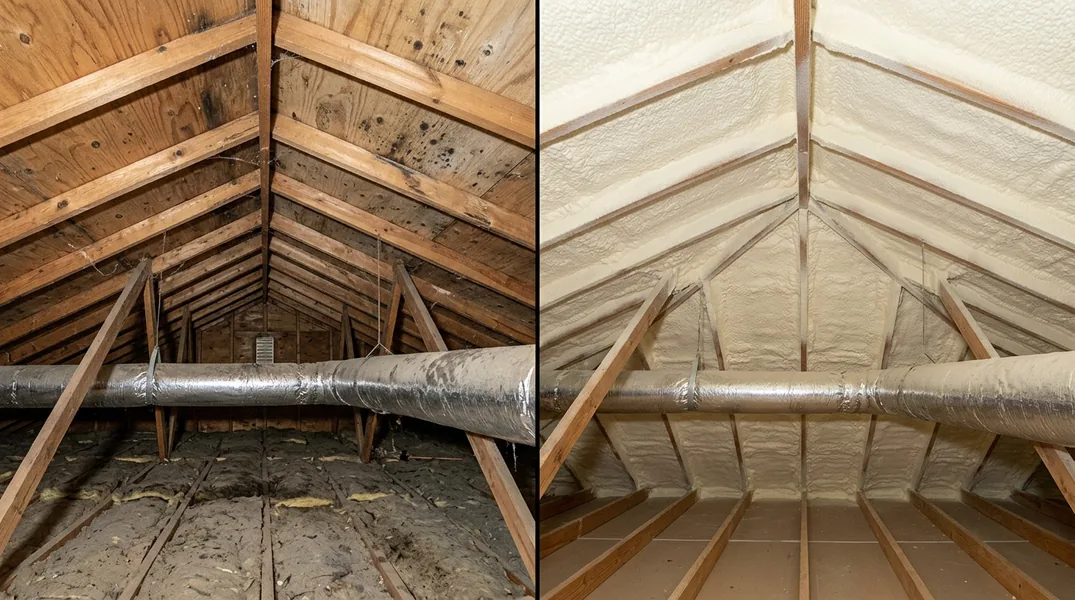
Understanding Spray Foam Insulation Types
When it comes to insulating your attic, attic spray foam insulation has become one of the most effective solutions for homeowners in Beaumont. However, not all spray foam is created equal. The two primary types available are open cell and closed cell spray foam, and each offers distinct advantages and drawbacks depending on your home's specific needs.
Spray foam insulation works by expanding to fill gaps, cracks, and cavities in your attic space. This expansion creates an air seal that prevents heat transfer and air leakage, which is why it outperforms traditional fiberglass batts or blown-in cellulose. The key difference between open and closed cell varieties lies in their cellular structure, density, and how they perform in different environmental conditions. Understanding these differences is essential before deciding which type is right for your Beaumont home.
What Is Open Cell Spray Foam Insulation?
Open Cell Spray Foam Insulation is a lighter, softer material with a lower density than its closed cell counterpart. The cells within open cell foam are not completely enclosed, which means air can move between them. This characteristic gives open cell foam an R-value of approximately 3.5 to 3.6 per inch, making it less dense and requiring more thickness to achieve the same insulating value as closed cell foam.
One of the primary advantages of open cell spray foam is its cost effectiveness. Because it requires less material to produce and install, homeowners typically pay less per board foot for open cell applications. Additionally, open cell foam is excellent at sound dampening and air sealing, which can significantly reduce outside noise and improve indoor air quality by preventing drafts. However, open cell foam is permeable to moisture, which means it allows water vapor to pass through. In humid climates or areas prone to moisture, this characteristic can be a limitation rather than an advantage.
What Is Closed Cell Spray Foam Insulation?
Closed Cell Spray Foam Insulation features a denser structure with cells that are completely enclosed and packed tightly together. This dense composition gives closed cell foam an R-value of 6.0 to 6.5 per inch, roughly double that of open cell foam. The superior insulating performance means you need less thickness to achieve your desired R-value, which can save space in attics with height constraints.
The closed cellular structure also makes closed cell foam impermeable to moisture and vapor, providing exceptional protection in humid environments. This moisture resistance is particularly valuable in attic applications where condensation and moisture infiltration can lead to mold growth, wood rot, and structural damage. Closed cell foam also adds structural rigidity to your attic, which can reinforce roof decking and improve wind resistance. The trade off is that closed cell spray foam typically costs more than open cell, both in material and installation labor. For homeowners seeking maximum protection and performance, however, the investment in closed cell often proves worthwhile.
Comparing R-Values and Thermal Performance
When comparing open cell versus closed cell spray foam, R-value is one of the most important metrics to understand. R-value measures a material's resistance to heat flow, and higher values indicate better insulating performance. Open cell spray foam delivers approximately 3.5 to 3.6 R-value per inch, while closed cell spray foam achieves 6.0 to 6.5 R-value per inch. This means that to reach an R-30 attic insulation level, you would need roughly 8.5 inches of open cell foam versus only 5 inches of closed cell foam.
In Beaumont's hot, humid climate, thermal performance is critical. The region experiences long, intense summers with high cooling demands, making superior insulation essential for reducing energy costs. Closed cell foam's higher R-value per inch means better heat rejection during summer months, which translates to lower air conditioning bills. Open cell foam can still provide adequate insulation if applied at sufficient thickness, but the additional material required may not fit within existing attic joist spaces. Both types create an air seal that prevents thermal bypass, but closed cell's superior density ensures more consistent performance across your entire attic envelope.
Moisture Control and Humidity Considerations for Beaumont Homes
One of the most critical factors in choosing between open and closed cell spray foam for Beaumont attics is how each material handles moisture. The Gulf Coast region experiences high humidity levels year-round, with moisture-laden air frequently infiltrating homes. Open cell foam's permeable nature allows water vapor to pass through the material, which can be problematic if moisture condenses on cold attic surfaces during air conditioning season.
Closed cell spray foam, conversely, acts as a vapor barrier in addition to an insulator. Its impermeable structure prevents moisture from penetrating the foam and reaching the attic framing and decking. This is particularly important for preventing mold growth, which thrives in warm, humid environments. When you choose attic spray foam insulation, especially in a climate like Beaumont's, closed cell foam's moisture resistance provides peace of mind and long-term protection for your home's structural integrity. Some homeowners do successfully use open cell foam in combination with a separate vapor barrier, but this adds complexity and cost to the installation.
Attic Spray Foam Insulation Cost in Beaumont: What to Budget
Understanding the financial investment required for spray foam insulation is essential for homeowners planning an attic upgrade. Open cell spray foam typically costs between 40 cents and 60 cents per board foot installed, while closed cell spray foam ranges from 80 cents to 1.20 dollars per board foot. For an average 1,500 square foot attic, open cell insulation might cost between 2,000 and 3,000 dollars, whereas closed cell could range from 4,000 to 6,000 dollars or more, depending on your desired R-value and attic complexity.
While closed cell spray foam carries a higher upfront cost, many homeowners view it as an investment that pays dividends through reduced energy bills, improved comfort, and protection against moisture-related damage. The superior R-value means you achieve your insulation goals with less material, and the vapor barrier properties eliminate the need for additional moisture protection. To get an accurate pricing estimate tailored to your specific attic, contact Beaumont Spray Foam Insulation at (409) 351-3691 for a free estimate. Our team can assess your attic's dimensions, existing insulation, and ventilation requirements to provide a detailed quote.
Which Type Is Right for Your Beaumont Home?
Choosing between open cell and closed cell spray foam ultimately depends on your priorities, budget, and specific attic conditions. Open cell spray foam is an excellent choice if you're looking for an affordable insulation solution that provides good sound dampening and air sealing in a relatively dry environment. It's also suitable if your attic has ample vertical space and you don't mind applying additional thickness to achieve desired R-values.
Closed cell spray foam is the superior choice for most Beaumont homeowners, particularly those concerned about moisture control, energy efficiency, and long-term durability. Its higher R-value per inch, vapor barrier properties, and structural reinforcement make it ideal for the Gulf Coast's challenging climate. If your budget allows, closed cell foam delivers maximum performance and protection. If cost is a primary concern, open cell foam with proper ventilation and moisture management can still provide adequate insulation. The best approach is to discuss your specific situation with experienced professionals who understand local climate conditions. Contact Beaumont Spray Foam Insulation today at (409) 351-3691 to schedule a free estimate and receive personalized recommendations for your attic insulation needs.
Looking for a professional spray foam insulation contractor in Beaumont? Beaumont Spray Foam Insulation responds fast for all your spray foam insulation needs.
Get a Free Quote